Source Franco Chain Necklace for Jewelry, DIY, and Gift Making
Explore 30 listings for the franco chain necklace suitable for decoration, health, and religious uses. Buyers can compare stainless steel and crystal options with gold or silver plating from Guangzhou suppliers offering OEM services.
Key considerations
Products List








Comprehensive Sourcing Guide
Strategic Sourcing Guide for Franco Chain Necklaces
Understanding Franco Chain Construction and Technical Specifications
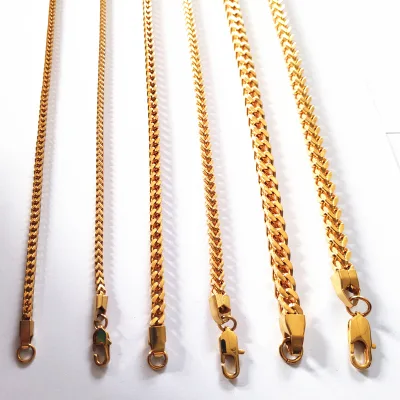
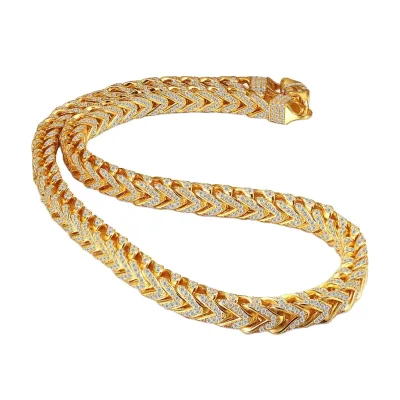
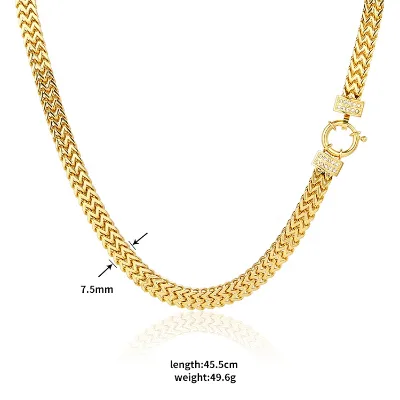
The Franco chain, often recognized for its distinctive interlocking links that create a flat, textured surface, represents a specific segment within the broader jewelry supply market. When sourcing this item, buyers must first distinguish between the various technical configurations available, as the term "Franco" can sometimes be applied loosely to different link styles depending on the manufacturer's regional terminology. Based on the observed product data, the physical dimensions of these chains vary significantly, with standard lengths recorded at 40cm, 45cm, and 60cm. This variance suggests that suppliers offer options suitable for different necklines and personal preferences, ranging from choker styles to longer, pendant-heavy designs.
Material composition is a critical technical variable. The supply data indicates a diverse range of base materials, including Stainless Steel, Alloy, and Crystal-based components. Stainless Steel variants are frequently noted for their durability and resistance to tarnish, making them a preferred choice for fashion jewelry intended for daily wear. Conversely, Alloy constructions may offer different weight profiles and casting capabilities, often utilized for specific design aesthetics like the "Unique 3D Design" mentioned in certain product listings. The plating options further define the technical specification, with Gold, Silver, and Rhodium plating being the most common finishes observed. These platings are not merely cosmetic; they serve as protective layers that influence the longevity and hypoallergenic properties of the final product. Buyers should verify the thickness of these platings, as this directly correlates with the product's resistance to wear and color fading over time.
Compliance Standards and Certification Verification
In the B2B jewelry sector, compliance and certification are non-negotiable elements of a professional procurement strategy. The supply data explicitly references several certifications, including CE, ISO9001, and CNAS Certification. These are not merely marketing labels but indicate that the manufacturing facility adheres to specific quality management systems and safety standards. ISO9001, for instance, suggests a commitment to consistent quality control processes, while CE marking implies compliance with European health, safety, and environmental protection standards. CNAS Certification points to the capability of the laboratory or facility to perform accredited testing, which is crucial for verifying material purity and safety.
However, buyers must exercise due diligence. The data notes that some products have a "custom" standard, while others list specific weights such as 10g or 8.7g. This discrepancy highlights the importance of verifying the "prod_standard" for each specific order. A custom standard may imply that the product is made to a specific buyer's design or weight requirement, rather than a universal industry norm. When evaluating a supplier, procurement teams should request documentation proving the validity of the CE, ISO9001, and CNAS certifications for the specific batch or production line being sourced. Relying on a general company certification without verifying its applicability to the specific product SKU can lead to compliance gaps, particularly when exporting to markets with strict jewelry regulations. Furthermore, the "custom" nature of some standards requires clear communication of the desired specifications to ensure the final product meets the buyer's regulatory requirements in their target market.
Cost Drivers and Pricing Dynamics
The pricing structure for Franco chain necklaces is influenced by a complex interplay of material costs, labor intensity, and customization requirements. The observed price range in the market spans from $0.35 to $318.24 USD, a variance that underscores the significant impact of material selection and finishing techniques. The lower end of this spectrum typically corresponds to products made from Alloy or basic Stainless Steel with standard plating, often produced in high volumes. The upper end of the range likely reflects items featuring higher-grade materials, such as solid gold plating, intricate Crystal components, or specialized designs like the "Unique 3D Design" mentioned in the data.
MOQ (Minimum Order Quantity) is another primary cost driver. The data shows an MOQ range of 3 to 200 units, with a specific observation of 30PCS for certain items. Lower MOQs, such as 3 units, are often associated with sample orders or highly customized, low-volume production runs, which carry a higher per-unit cost due to setup and labor inefficiencies. Higher MOQs allow for economies of scale, reducing the unit price but requiring a larger upfront capital commitment. Additionally, the "Sample Fee" policy, which is often returned upon placing a formal order, acts as a risk mitigation tool for suppliers but adds an initial cost for the buyer. Buyers should factor these sample costs into their total procurement budget, understanding that they are an investment in verifying quality before committing to a larger production run. The payment terms, including T/T, Western Union, PayPal, and Money Gram, also influence cash flow and financial risk, with T/T (Telegraphic Transfer) being the most common for B2B transactions involving deposits.
Typical Applications and Market Segmentation
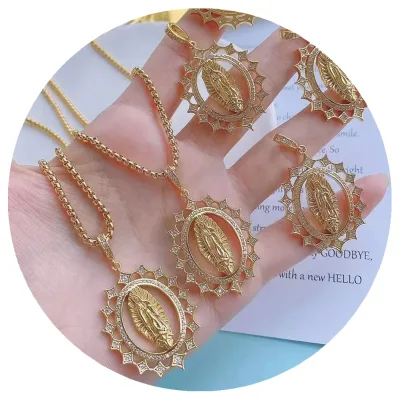
Franco chain necklaces serve a broad spectrum of applications, extending beyond simple adornment to include functional and cultural uses. The data indicates that these products are suitable for Females, Males, Children, and the Elderly, suggesting a versatile market appeal. The "Usage" category lists Decoration, Health, and Religious purposes. While Decoration is the primary function, the inclusion of Health and Religious usage implies that certain designs may incorporate specific charms or pendants, such as the "Cross" or "Round" shapes observed, which carry symbolic weight. The "Pendant Shape" varies from Charm to Round and Cross, allowing for diverse styling options that cater to different cultural and personal preferences.
The target audience for these products is equally diverse. The data explicitly mentions suitability for "Jewelry Wholesaler, Distributor," indicating that the supply chain is structured to support B2B resale rather than just direct-to-consumer sales. This makes Franco chains a staple for retailers looking to stock a wide variety of styles. Furthermore, the "Apply to" section lists Jewelry Design, Handcraft DIY, Bag Accessories, and Gift applications. This versatility allows the product to be used as a component in larger jewelry pieces, a DIY craft element, or a standalone gift item. The "Style" is categorized as "Fashion," which aligns with the trend-driven nature of the jewelry industry. Buyers should consider these varied applications when planning their inventory mix, ensuring they have options that cater to both mass-market fashion trends and niche religious or gift-oriented segments.
Supplier Evaluation and Service Capabilities
Selecting the right supplier requires a thorough evaluation of their service capabilities and operational flexibility. The supply data highlights several key service attributes, including "Welcome OEM&ODM," "OEM&Custom Design Manufacture," and "Stock Available." These services indicate that suppliers are capable of producing custom designs, modifying existing patterns, and maintaining inventory for immediate shipment. The "Service" section also notes "Stock Available," which is a critical factor for buyers needing quick turnaround times without waiting for production cycles.
Lead times are another crucial metric for supplier evaluation. The data specifies delivery times ranging from "Within 20-35 days" to "Within 30-35 days after getting deposit." These timelines are standard for custom manufacturing but can vary based on the complexity of the design and the current production load. Buyers should verify these lead times against their own inventory requirements to avoid stockouts. Additionally, the "Sample Time" is listed as "Within 15 Work Days," which is a reasonable timeframe for prototyping. The availability of multiple shipping methods, including UPS, DHL, FedEx, TNT, and EMS, provides flexibility in logistics. However, buyers should confirm the specific shipping arrangements and costs, as these can significantly impact the final landed cost of the goods. The "Main Business" of suppliers, which includes Rings, Pendants, Cufflinks, Bracelets, and Necklaces, suggests a broad product range, but buyers should ensure the supplier has specific expertise in Franco chains to guarantee quality and consistency.
Quality Control and Long-Term Procurement Considerations
Effective quality control (QC) is essential for maintaining brand reputation and customer satisfaction. Given the variations in material (Stainless Steel, Alloy, Crystal) and plating (Gold, Silver, Rhodium), buyers must establish clear QC protocols. The "prod_model" numbers, such as 596129650770 and 655446114842, serve as unique identifiers for specific product configurations. Buyers should use these model numbers to track quality consistency across different production batches. The "Clasp" type, such as Lobster Clasper or Jump Ring, is another critical QC point, as the clasp mechanism is a common failure point in jewelry.
For long-term procurement, buyers should consider the scalability of the supplier's operations. The "Customization" availability and "OEM&ODM" services suggest that suppliers can grow with the buyer's needs. However, the "Standard" of "custom" for some items requires ongoing communication to ensure that specifications remain consistent. The "Payment" terms, including T/T and Bank Transfer, should be negotiated to balance risk and cash flow. Additionally, the "prod_packing" being listed as "Carton" indicates standard packaging, but buyers may need to request custom packaging for branding purposes. The "Location" of the supplier, specifically Guangzhou, China, is a major hub for jewelry manufacturing, offering access to a robust supply chain and skilled labor. However, buyers should be aware of potential logistical challenges and ensure that the supplier has reliable export procedures. By focusing on these long-term considerations, buyers can build a sustainable and resilient supply chain for Franco chain necklaces.
FAQs
What materials are used for franco chain necklaces?
These necklaces are made from Stainless Steel, Alloy, and Crystal components. Buyers can choose between durable Stainless Steel for daily wear or Alloy for specific design aesthetics like unique 3D shapes.
Which certifications do the manufacturers hold?
Manufacturers hold CE, ISO9001, and CNAS Certification for quality and safety compliance. These standards ensure consistent quality control and adherence to European health and environmental protection requirements.
How long is the delivery time after deposit?
Delivery occurs within 20 to 35 days after receiving the deposit. This timeline applies to custom manufacturing orders and may vary based on design complexity and current production load.
Can I customize the length of the chain?
Yes, customization is available with standard lengths of 40cm, 45cm, and 60cm. Suppliers offer options suitable for different necklines, allowing buyers to select choker styles or longer pendant-heavy designs.
What is the minimum order quantity for these items?
The minimum order quantity ranges from 3 to 200 units depending on the specific product. Some items have a specific MOQ of 30 pieces, while others allow lower quantities for samples.
Which plating options are available for the finish?
Available plating options include Gold, Silver, and Rhodium finishes. These platings serve as protective layers that influence the longevity and hypoallergenic properties of the final jewelry product.